 overseasales@jwele.com.cn
 English
 Login
Login


Project at a Glance
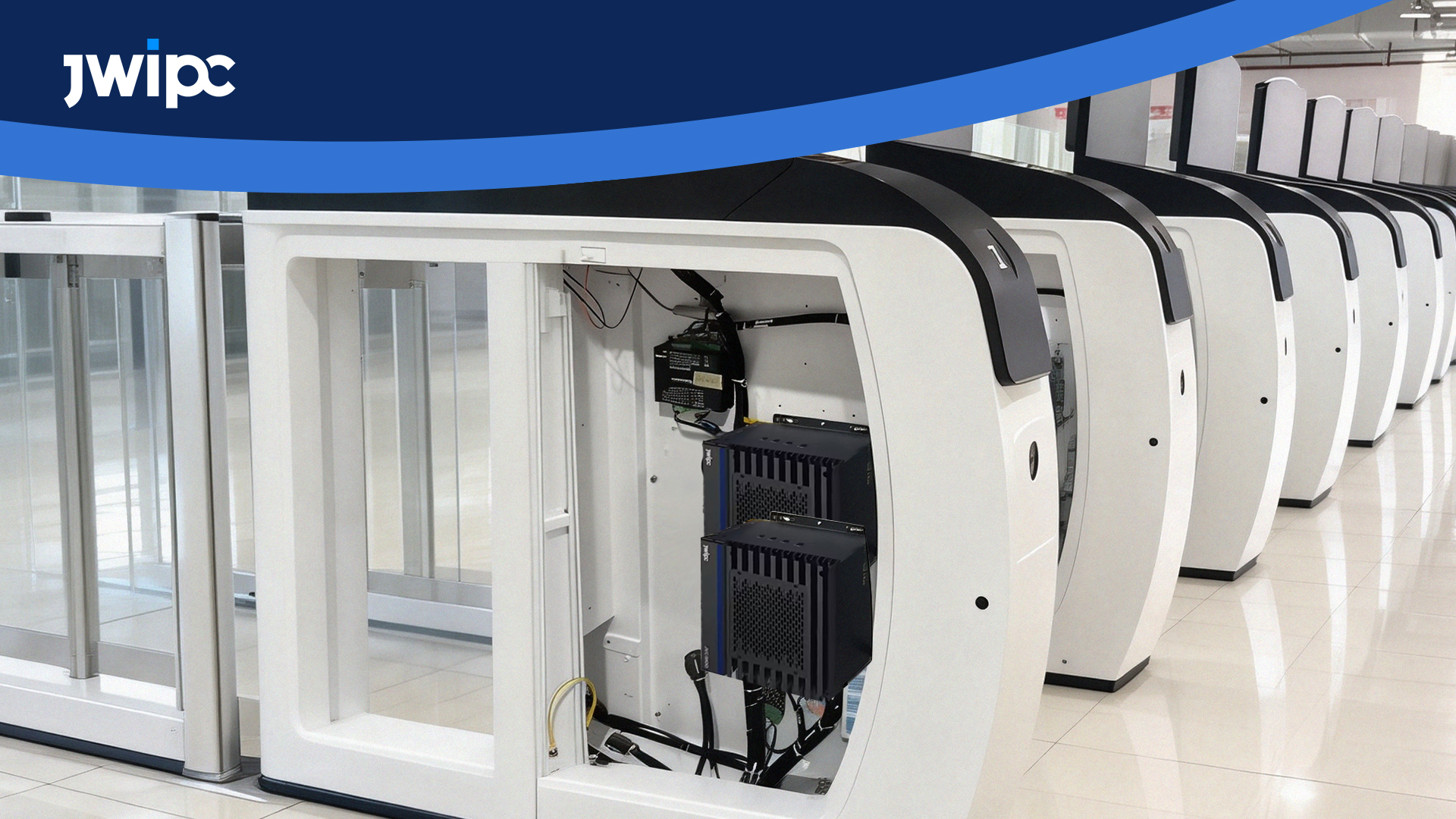
Location: Huanggang Port, Greater Bay Area (GBA), China
Application: Smart Self-Service Checkpoint Gate System
Core Challenge: Managing high-frequency identity verification and multi-device coordination 24/7 in a high-traffic border hub with strict space and security constraints.
Solution: JWIPC JVC-9101 Embedded BOX PC (Edge Computing Hub)
Impact: Seamless passenger clearance, hardware-level network isolation, and a highly scalable, ruggedized architecture ready for global infrastructure replication.
As public infrastructure becomes more intelligent, smart checkpoint systems are expected to deliver faster verification, smoother passenger flow, and higher operational reliability. In high-traffic environments, every second matters. Gate systems must coordinate identity verification, peripheral control, data communication, and real-time response within limited installation space, while maintaining stable operation around the clock.
For a major smart checkpoint infrastructure project in China’s Greater Bay Area, the system required an embedded computing platform that could support multiple verification devices, local data processing, network separation, and 24/7 operation. To meet these requirements, JWIPC provided the JVC-9101 embedded BOX PC as the core edge computing platform, helping the project build a reliable, scalable, and integration-ready smart checkpoint solution.

The Challenge: High Traffic, Strict Security
System Requirements
The project required a computing platform that could support the complex workflow of modern self-service gate systems. Key requirements included:
Stable 24/7 operation in high-traffic environments
Local processing for identity verification and device coordination
Rich I/O connectivity for readers, cameras, displays, and control modules
Network separation for service, management, monitoring, and maintenance functions
Flexible expansion for future system upgrades and peripheral integration
Operating system compatibility for software deployment and long-term maintenance
A compact, industrial-grade design suitable for enclosed gate cabinets
These requirements meant the computing platform needed to do more than process data. It had to act as the central hub connecting front-end devices, local computing, network communication, and gate control.
Key Platform Metrics: JWIPC JVC-9101
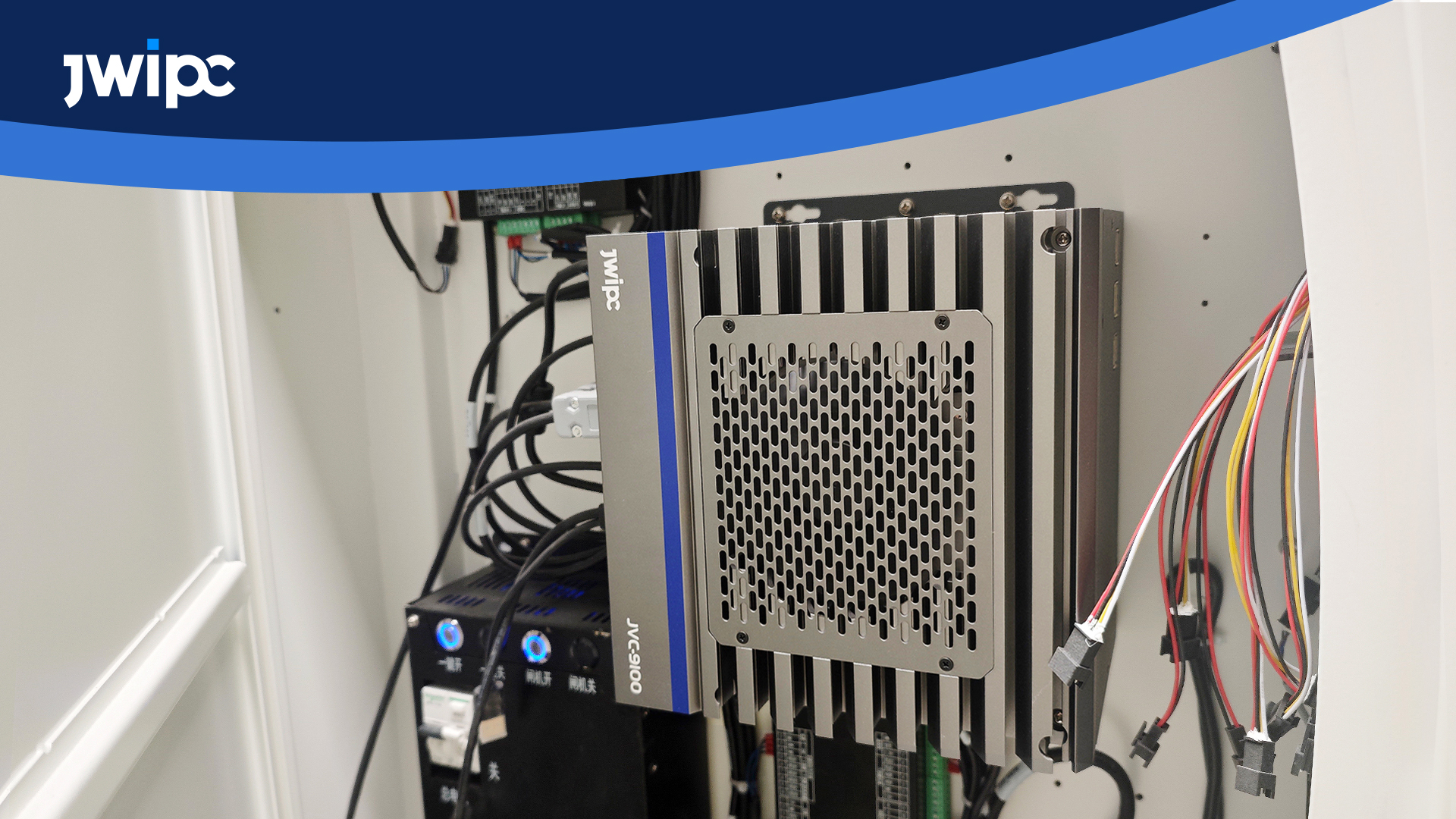
In this project, the JVC-9101 served as more than an embedded BOX PC. It functioned as an edge computing hub, I/O gateway, network interface, and control platform within the smart checkpoint system.
Powered by the High performance processor, the JVC-9101 provides a stable computing foundation for local edge processing. With support for DDR5 memory, the platform enables smooth performance when multiple verification, communication, and control tasks run simultaneously. This helps improve checkpoint efficiency and user experience during peak traffic periods.
The JVC-9101 also offers rich native interfaces, including four USB 3.0 ports, ten COM ports, four Gigabit LAN ports, HDMI, VGA, M.2, and PCIe expansion. These interfaces allow system integrators to connect document readers, biometric devices, cameras, display modules, communication equipment, and gate control systems without relying heavily on external adapters. This helps simplify system integration, reduce deployment complexity, and shorten project implementation time.
For network reliability and security, the four Gigabit LAN ports can support network separation for service, management, monitoring, and maintenance functions. This design helps improve system stability while supporting more structured network management in critical infrastructure environments.
Designed for demanding industrial applications, the JVC-9101 features a fanless embedded structure, stable DC power input, and -10°C to 60°C operating temperature support. These features make it suitable for enclosed cabinets, space-constrained terminals, and continuous operation scenarios where heat, dust, vibration, and system reliability are key considerations.
Application Architecture
The smart checkpoint architecture can be viewed through four key layers: front-end sensing, edge processing, network separation, and gate control.
At the front end, different devices collect identity, image, document, or access-related information. This data is then processed locally by the JVC-9101 inside the checkpoint system, supporting fast verification and device coordination. With local closed-loop processing, sensitive data can remain within the system while response speed is improved.
The JVC-9101 also connects with display modules, communication devices, and control equipment to support the interaction between users, operators, and the gate system. Meanwhile, its multi-LAN configuration helps separate different network functions, supporting more reliable operation and easier system maintenance.
By consolidating computing, connectivity, and control into one compact platform, the JVC-9101 helps reduce the need for multiple separate hardware components. This is especially valuable in smart gate systems, where internal space is limited and long-term stability is essential.
Implementation & Impact
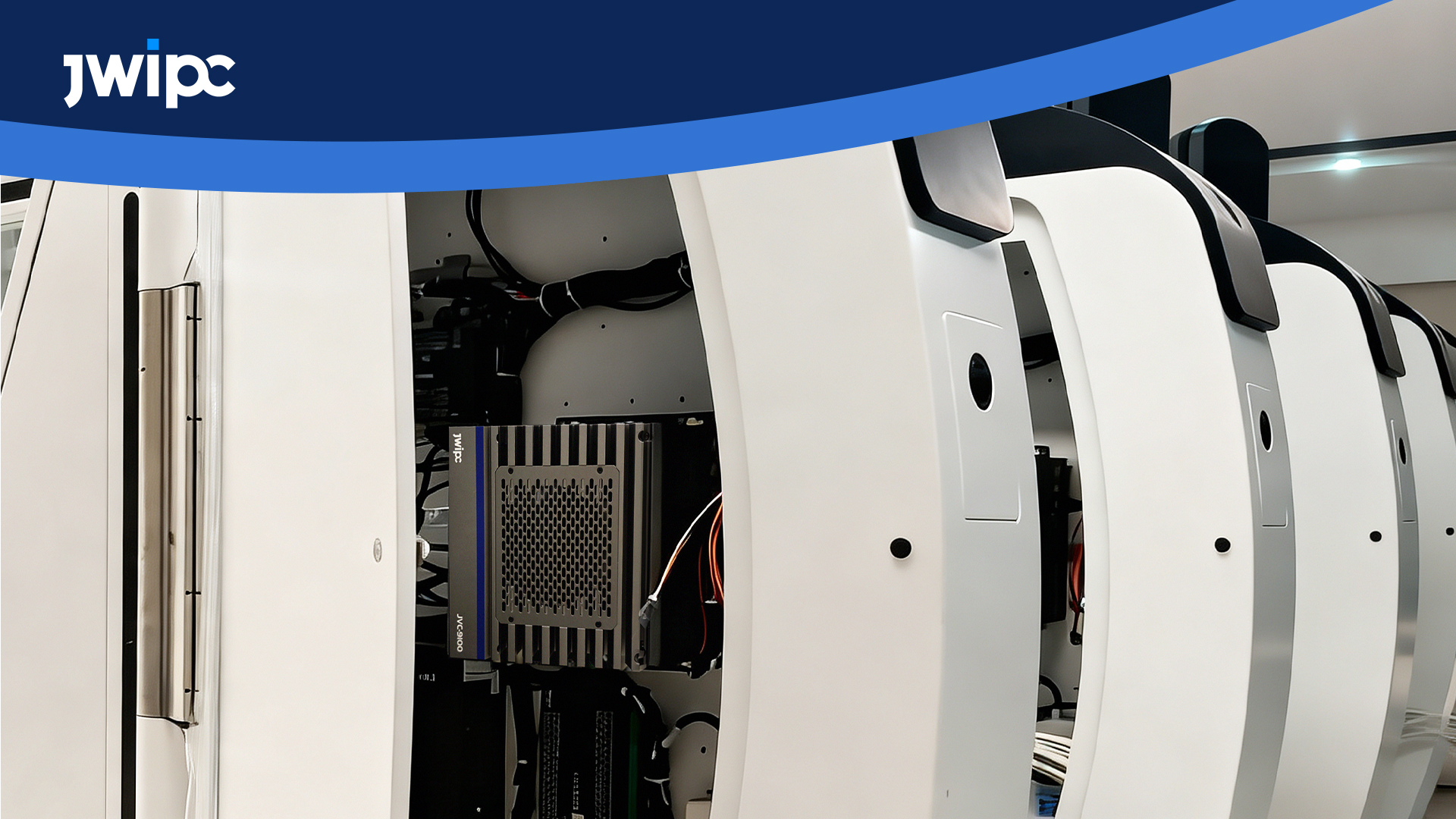
This Greater Bay Area deployment represents an important large-scale real-world validation of the JWIPC JVC-9101 in smart checkpoint infrastructure. The project demonstrates how an industrial edge computing platform can support high-frequency verification, multi-device coordination, local data processing, and continuous operation in a demanding public infrastructure environment.
With a standardized and modular design, universal interfaces, strong expansion capability, and wide system adaptability, the solution can be rapidly replicated across land ports, airports, seaports, highway transportation, financial security, industrial control, and other high-reliability application scenarios.
For system integrators and infrastructure solution providers, the value of the JVC-9101 is not limited to its specifications. It provides a practical hardware foundation that helps simplify integration, improve deployment efficiency, enhance user experience, and support future system upgrades. As smart infrastructure continues to evolve, reliable edge computing platforms will play an increasingly important role in connecting devices, processing data locally, and enabling faster on-site response.


