 overseasales@jwele.com.cn
 English

 Login


Interactive Flat Panel Display manufacturers and solution providers often require more than a standard OPS computing module. Different processor platforms, operating systems, connectivity requirements, and application environments can make a customized solution necessary.
Note: The OPS standard is a standard for IFPDs jointly released by JWIPC and Intel.
OPS customization allows businesses to develop computing modules that better match their display products, software environments, and project requirements.
However, successful customization involves more than selecting a CPU or changing a product configuration. It requires coordination across hardware design, PCB development, system integration, thermal management, testing, and manufacturing.
As an experienced computing hardware manufacturer, JWIPC provides standardized products and ODM services to support different customer requirements. This guide explains the key considerations involved in developing a customized product.
Define Your OPS Customization Requirements Before Development
The first step in an OEM/ODM project is to establish a clear product specification.
Before discussing hardware modifications, customers should identify the intended application, target display, installation environment, and expected production requirements.
Important information includes:
· Application Scenario: Smart classrooms, meeting rooms, digital signage, or other interactive environments.
· Display Compatibility: Existing OPS slot dimensions, mechanical structure, power supply, and supported interfaces.
· Performance Requirements: Processor platform, memory capacity, storage, and graphics performance.
· Operating System: Windows, Linux, or another supported operating environment.
· Connectivity: HDMI, DisplayPort, USB, LAN, wireless connectivity, and other required interfaces.
· Production Requirements: Expected order quantity, target markets, delivery schedule, and product lifecycle.
A detailed requirement document helps the manufacturer evaluate feasibility and reduce unnecessary design changes later.
For customers exploring an ops pc solution, defining the host display and application requirements is particularly important because it will directly affects the final product design.
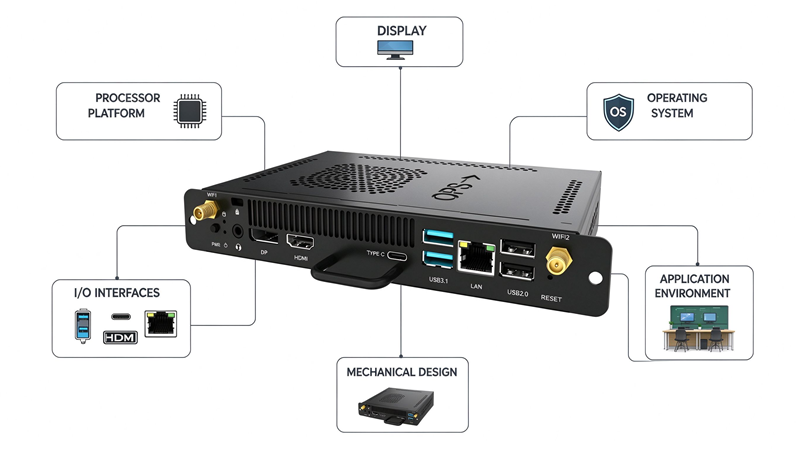
What Can Be Customized in an OPS Computing Module?
OPS customization can involve several hardware and software components. The specific scope depends on the customer's requirements and the feasibility of the proposed design.
Processor and Computing Platform
Processor selection determines the computing capabilities and application compatibility of the module.
Customers may need to consider:
· Processor performance and power consumption.
· Integrated graphics capabilities.
· Memory and storage configurations.
· Operating system and software compatibility.
JWIPC offers OPS, OPS-C and OPS 2.0 variants with a wide range of processor platforms.
Customers can explore the existing ops pc module configurations as a starting point before discussing further customization.
PCB Layout and I/O Configuration
PCB layout determines how components and interfaces are arranged within the module.
Depending on project requirements, customization may involve:
· USB and LAN interface configurations.
· HDMI and DisplayPort connectivity.
· Audio interfaces.
· Wireless modules.
· Memory and storage interfaces.
· Component selection.
The final interface configuration should be verified against the application requirements.
BIOS, Operating System, and Software Integration
Hardware compatibility alone does not guarantee successful deployment.
JWIPC’s service portfolio covers system integration capabilities including OS transplantation, system tailoring and customization, software development, and hardware software integration.
These services can support customers requiring specific operating environments, device configurations, and application compatibility.
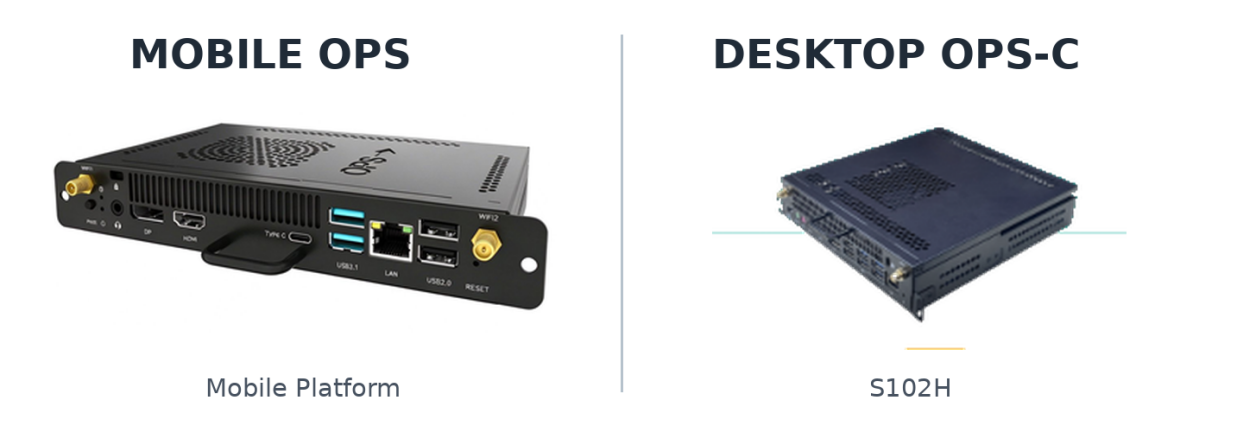
Mobile Platform or Desktop Platform: Which OPS Configuration Should You Choose?
The appropriate platform depends on the intended application, display architecture, performance requirements, and product integration constraints.
Mobile Platform OPS
obile platform OPS products are better suited for devices where thermal performance and battery impact are considerations.
JWIPC's catalogue includes the S104 and S104C standard OPS models, as well as S124 and S134 AI OPS models.
Desktop Platform OPS
esktop platform products offer more options and stronger integrated graphics capabilities.
JWIPC's catalogue also presents desktop platform OPS-C models, including S102 and S102T.
When evaluating a customized ops module, customers can consider JWIPC's current S124 AI OPS or S102H OPS-C models, then compare platform architecture, processor availability, memory support, I/O requirements, thermal conditions, and the target display's mechanical specifications.
Customization Factor | Key Considerations | Recommended Preparation |
Processor Platform | Intel, ARM, and application compatibility | Define computing workload and software requirements |
Memory and Storage | Capacity and interface compatibility | Specify target configurations |
I/O Interfaces | USB, LAN, HDMI, audio, and wireless | Provide an interface list |
Software | OS, BIOS, drivers, and applications | Provide software and compatibility requirements |
How JWIPC Supports OPS OEM/ODM Development and Manufacturing
A reliable customization project requires coordinated engineering and manufacturing capabilities.
JWIPC offers a standardized portfolio of OPS PC products and ODM services, backed by a full range of engineering capabilities.
ID and ME Design
ID design covers appearance, material utilization, and ergonomics.
ME design includes housing, thermal management, power design, and vibration-resistant engineering.
These capabilities help ensure that the customized module meets the required structural and operating conditions.
PCB Design and System Integration
JWIPC provides PCB layout design services, including circuit design, component selection, and power supply design.
Its system integration capabilities include operating system transplantation, tailoring and customization, software development, and hardware-software integration.
Testing and Product Validation
Before mass production, customized products should undergo appropriate validation.
JWIPC's catalogue identifies functionality and compatibility testing, reliability and environmental testing, EMC testing, and MTBF testing.
Product certification support is also included in its customization service portfolio.
Manufacturing and Quality Support
JWIPC's company materials describe manufacturing resources covering automated production, SMT and DIP lines, quality inspection, and manufacturing management systems.
The OPS PC Catalogue also presents standardized manufacturing and ODM services as part of its overall customer offering.
For customers seeking an ops pc solutions, JWIPC can discuss the available product platforms and evaluate customization requirements based on the project scope.
Conclusion
OPS customization requires coordinated decisions across computing platforms, PCB design, thermal management, software integration, and product validation. A clear specification and early compatibility assessment can reduce development risks and improve production readiness. JWIPC combines standardized OPS products, ODM engineering services, system integration, testing, and manufacturing capabilities to support IFPD projects. By working with an experienced hardware manufacturer, businesses can develop OPS solutions that better match their product requirements, application environments, and long-term deployment plans.
Frequently Asked Questions
Can an existing OPS product be used as the starting point for customization?
Yes. An existing platform can provide a reference for evaluating the required hardware and structural modifications.
Does OPS customization always require a new PCB design?
No. Some projects may only require configuration adjustments, while others may need PCB redesign depending on the technical requirements.
Can customers specify their preferred processor brand?
Customers can communicate their preferred processor platform. The manufacturer should evaluate availability, compatibility, performance, and design feasibility.
Can JWIPC support customized operating systems?
JWIPC's catalogue lists OS transplantation, tailoring, and customization as part of its system integration services. Specific OS support should be confirmed during project evaluation.
What information should customers provide for an OEM/ODM quotation?
A product specification, display drawings, processor requirements, interface list, operating system requirements, estimated order quantity, and target delivery schedule are useful starting materials.
Can customized OPS products undergo certification and reliability testing?
JWIPC's catalogue includes testing and product certification capabilities. The applicable tests and certification requirements should be confirmed according to the final product configuration and target market.


